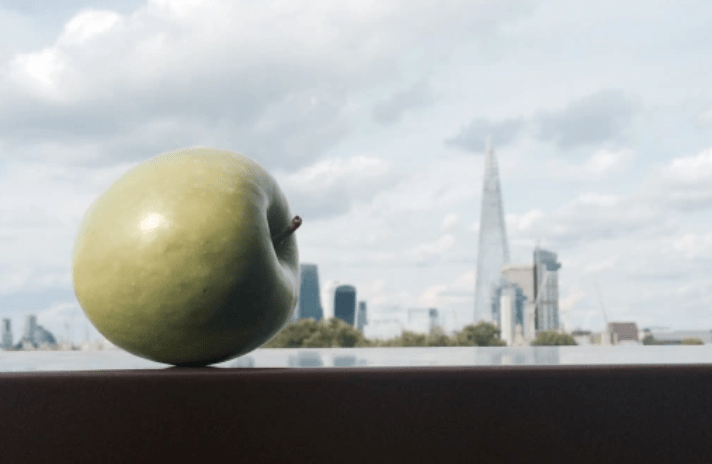
The Appletini, or Apple Martini, is a tart, sweet and sour delight that originated in the US. It represents freshness, style and innocence (or loss thereof).
Quick Fire Recipe
This is the easiest way to prepare the drink, although ideally you will have at least six hours in advance to chill the vodka properly.
You will need:
- Vodka
- Sour apple liqueur or schnapps
- Sugar syrup
- A garnish (a slice of apple in some form, or a maraschino cherry)
- V-shaped glasses for serving
How to prepare
Put your vodka and V-shaped glasses in the freezer to chill – at least 6-8 hours for the vodka. Put the apple liqueur or schnapps in the refrigerator for the same amount of time. When it’s time to pour, take out the glasses and ingredients and pour the following proportions:
- 60ml / 2oz vodka
- 30ml / 1oz sour apple liqueur or schnapps
- 1-2 teaspoons simple sugar syrup to taste.
Stir the drink in the glass, add your garnish of choice and serve immediately.
If you don’t have time to freeze your vodka
Go and have a think about your life priorities. But you can still shake up the same drink with ice and a shaker if you haven’t prepared in time. It’s a little bit more effort and won’t be as cold, strong or pure as the method outlined above, but you will certainly still get to enjoy the drink.
Add the ingredients to a cocktail shaker with plenty of ice. If you don’t even have a cocktail shaker (it happens…) you can use a large, clean jar.
Wrap the shaker in a tea towel and convulse it rigorously. You want to be able to feel the cold come through the tea towel. The colder you get it, the better.
If this seems like a lot of effort, then (1) it’s worth it and (2) it should serve as a reminder for you to keep your gin and vodka in the freezer at all times. You can find out more about that sort of thing here.
Which vodka should I use?
The original recipes call for Smirnoff or Ketel One vodka.
Otherwise, I would recommend a neutral vodka rather than anything flavoured. I wouldn’t use your best quality vodkas either because these are best sipped chilled and neat, preferably with some nice accompanying bites of food.
Tell me more about her
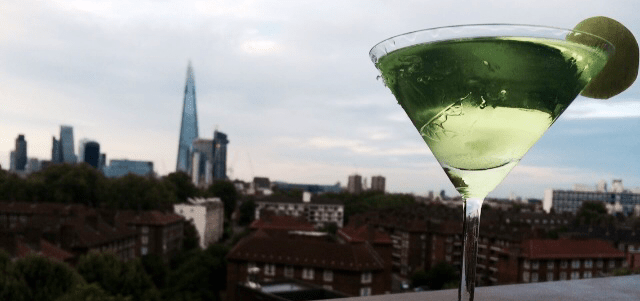
The Appletini has been around since the 1970s but in different guises. There are a few different recipes out there.
Some earlier versions were simply a mixture of apple juice and vodka, which is barely a martini. Thankfully, it was refined and reinvented in the 1990s, marking the beginning of its heyday.
The most successful and longstanding recipes now appear to be a roughly half-and-half mixture of vodka and sour apple liqueur or schnapps, with with an addition of some form of sweetener like a sugar syrup, honey or apple juice.
My recipe errs on the side of the ‘tini (more vodka) but as with all martinis, it’s comes down to personal preference.
Some recipes call for vermouth as in a classic martini but I find that it clashes too much with the schnapps.

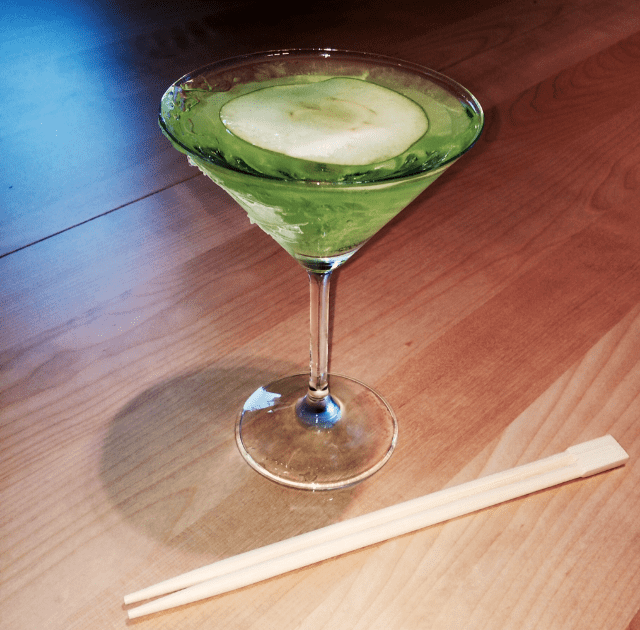
The drink is usually garnished with some form of apple, such as a thin slice that is either fresh or has been marinated, candied or dehydrated. All of them have their charms. Marinated can be zingy, candied is a sweet treat and dehydrated is the easiest to serve – especially if you’re making several.
Alternatively, a maraschino cherry is a popular choice because it adds a little sweetness to the sour drink and provides a sharp colour contrast to the green apple.
History of the Appletini
Smirnoff Vodka ran an advertising campaign in the 1970s to promote a new drink: the Adam’s Apple. This was essentially just a dash of Smirnoff added to a glass of apple juice. They were hoping to replicate the success of the Moscow Mule (vodka, ginger beer and lime juice).
Given that apple juice is probably one of the world’s oldest mixers ever used in spirits, this was hardly a new concept, it would be hard pressed to call it a ‘martini’ – but it is a delicious combination.
Playboys
The advertising campaign was promoted in Playboy magazine, known for its role in the sexual revolution as well as accusations of female objectification. The publication is also notable for printing short stories by literary greats including Sir Ian Fleming, Roald Dahl, Arthur C. Clarke and Margaret Atwood.
The Smirnoff recipe specifically called for “an ounce or so” of Smirnoff vodka to be added to “an ice-filled glass (tall or short)” which you then topped up with apple juice or apple cider. Hardly the rigid measurements of a committed mixologist but presumably the goal was for readers to enjoy an easy-to-prepare drink to the ratios of their preference.
Given that this was the US I imagine the ‘cider’ is the non-alcoholic version popular in North America, rather than the harder, sometimes dangerous stuff consumed in parts of the UK, France and other countries.

The 1990s Refinement
It was a few more years before the drink enjoyed a meteoric rise to ubiquity in the late 1990s. As with most martini origin stories, there are some doubts and alternative stories over where the modern version arose, but the most commonly accepted version begins in the now closed restaurant Lola’s, located in West Hollywood.
Bartender Adam Karsten is attributed with updating the vodka-apple juice concoction to the recipe we know today. It initially took its name from a combination of the Smirnoff version and his own name, being labelled the Adam’s Apple Martini, before evolving into the Apple Martini, Sour Apple Martini, or Appletini.
While Playboy may have helped lay the groundwork for the apple resurgence, it was female-owned business Lola’s, set up and run by Loren Dunsworth, where the stars aligned and the appletini was truly launched.
Social

In the 2010 film ‘The Social Network’ the girlfriend of one of the Facebook co-founders ordered an apple martini at a bar, which prompted one of the other co-founders to buy a round for the table.
According to an archived article in the New Yorker, when Mark Zuckerberg attended the premier of the film he had never actually drunk an appletini, but subsequently made it the official drink of Facebook. I’m imagining this has crossed over to Meta as well.

What does it represent?
Martini purists will view this as a sweet cocktail, simply served in a martini glass. Considering its lasting appeal, I feel that it has earned its ‘-tini’ suffix, even though it is not a pure or classic version of the drink.
The apple is, of course, associated with temptation and loss of virtue. Indeed, the appletini is the preferred drink of Eve in the Netflix series Lucifer.

That said, while a red apple might evoke themes of lust or forbidden pleasure, the overwhelming majority of appletinis are green, which instead evokes freshness, new beginnings and innocence.
This concept of appletini innocence is also poignantly linked to the spirit of Americana in the late 1990s when the drink reached its zenith.
It marked those sunny years after the end of the Cold War, but before the globally-wrenching nightmare trigged by the 9/11 attacks on New York.
The zeitgeist likes her martinis bittersweet.
All in all, this is a relative newcomer to the martini scene, but it has earned its place in the history books for its appeal and rapid rise to popularity.
 The Martini Socialist