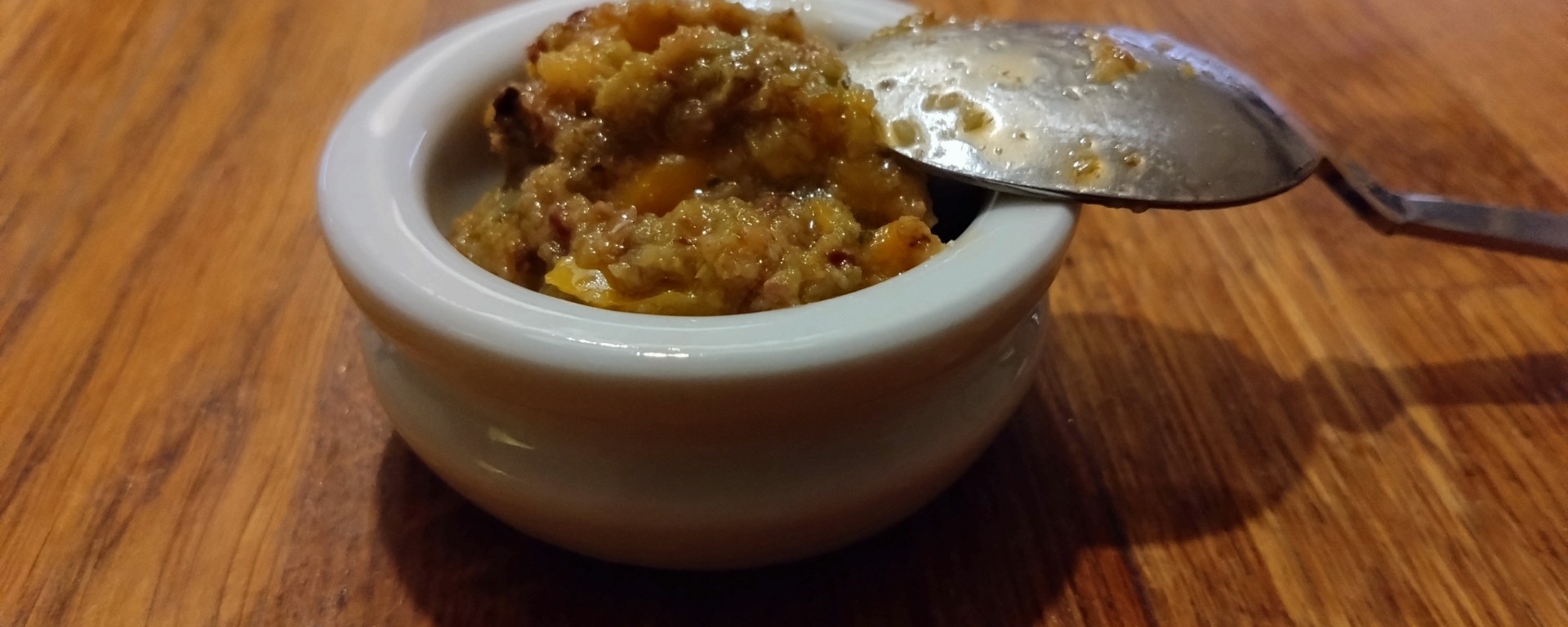
Olives are the most iconic edible accompaniment to a martini. They are, of course, commonly served as a garnish themselves, but are often dished on the side as well.
By turning them into a tapenade, you gain additional flexibility in how to serve them.
Origins
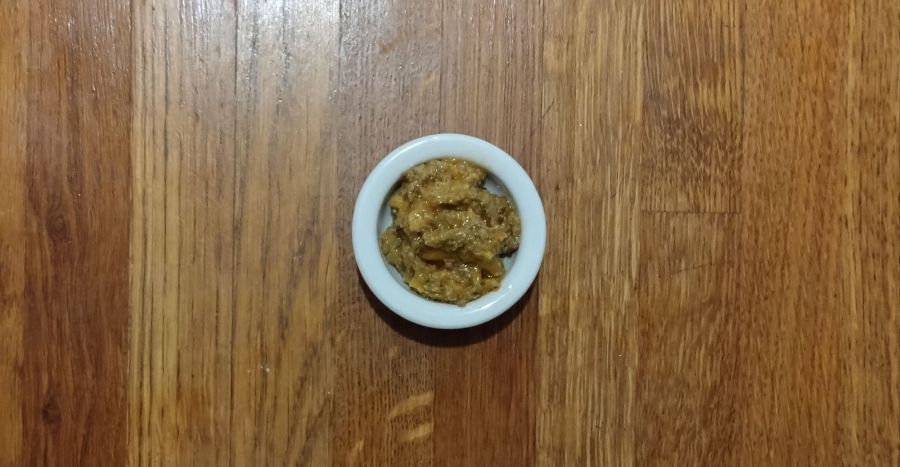
Tapenade is essentially a spread or paste. Variations, equivalents and comparable items have been consumed by millennia, especially around the Roman Empire and the countries that now stand on its foundations.
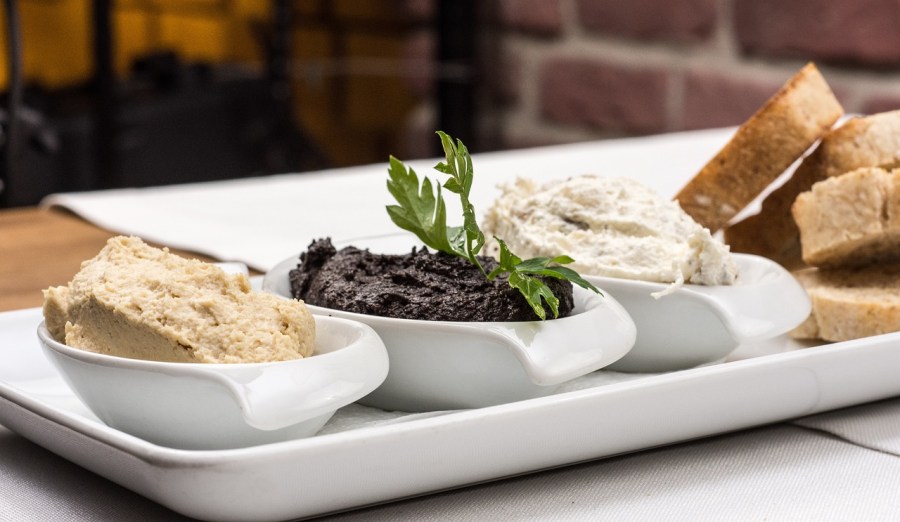
The closest you will get to an official recipe today originates in Provence, and typically involves black olives and capers, but you can substitute, mix and match the ingredients you have to hand to make variations.
You can then serve it on salads and bread, or with crudités, but for martinis, I think they work best served on bite-sized crackers.
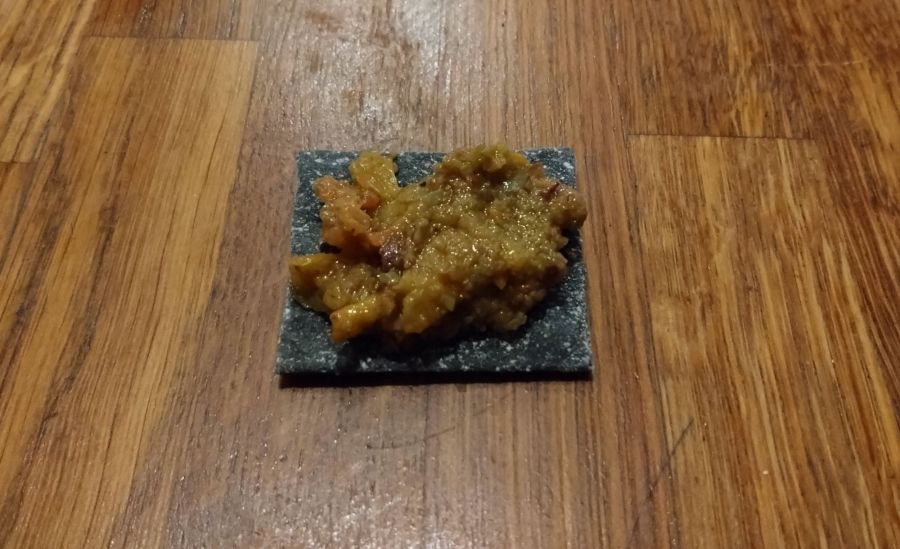
This recipe involved a mixture of pitted Nocellara and Coquillo olives, as well as some slow roasted yellow pepper, cherry tomatoes and a little olive oil. The ingredients came pre-arranged from a deli and could have been served as they were with toothpicks as a form of tapas. Nonetheless, we thought we would turn it into a paste to add to some canapés to go with our drinks.
How to prepare
This is very easy. Simply crush the ingredients using a pestle and mortar or a stick blender.
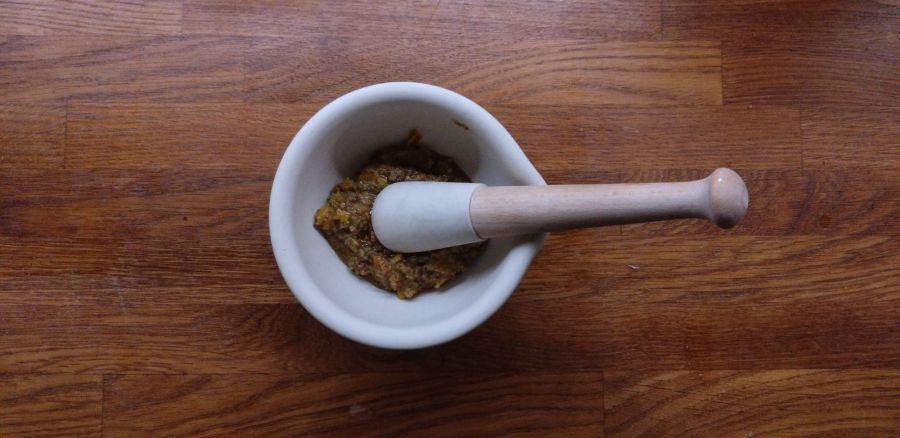
You can grind it down so it’s very smooth but it’s also absolutely fine to serve your tapenade chunky as well. It’s up to you how you prefer it.
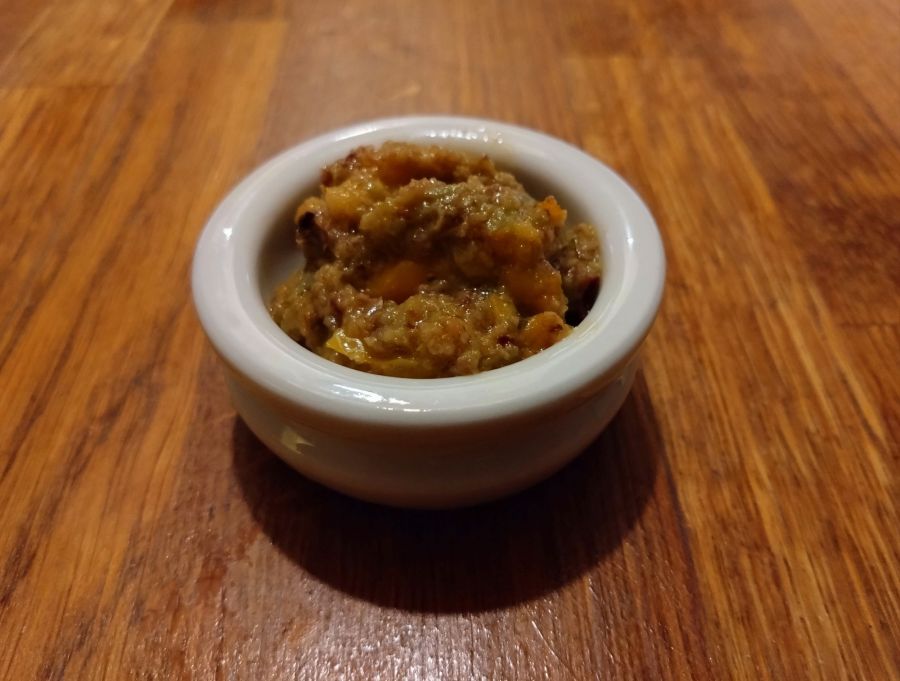
Then you simply serve it, ideally with a cold martini and some crackers or biscuits for people to serve themselves. You can also prepare the crackers with tapenade topping in advance and serve on a plate so it’s even easier to eat while you’re enjoying your drink.

Pairings
This would go perfectly with a Classic Martini, and indeed many of the classic variations, but it would go particularly well with a Dirty Martini, or, for my personal recommendation, the highly underrated Filthy Martini which is garnished with a juicy pickled caperberry.
Bon appetit!
 The Martini Socialist
Perfection. 🍸
LikeLike