
How do you know if your gin is cold enough for a martini?

The simple answer is this: it has to be freezing.

If, as per previous instructions, you have kept your gin and glasses in the freezer for several hours before martini time, you should easily pass this test.

I recommend that martinis are made with freezer-stored gin and stirred briefly with the vermouth in the glass. I do not approve of shaking or stirring the drink with ice.

The James Bond version results in the finished drink being watered down and we just can’t have that.

Furthermore, the above technique (filling the glass with ice cubes shortly before serving) is barely effective. It takes time and doesn’t chill the glass very much.

I think the shaking method only remains popular because of the visual element of the preparation, rather than the quality of the finished drink.
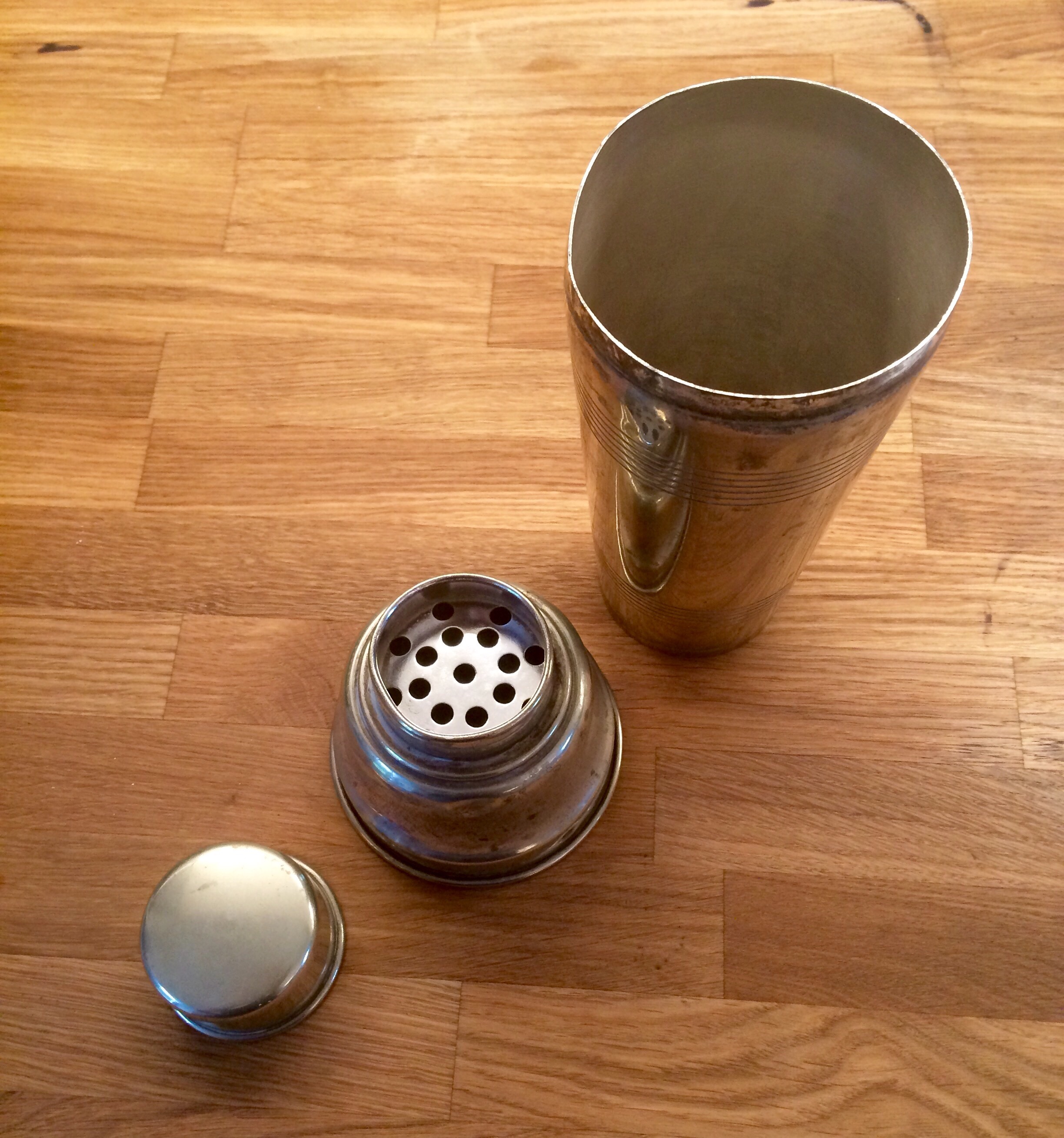
No offence to bartenders – their method is almost a theatrical performance; an act of entertainment – and this is no bad thing at all!

Also note that some martinis specifically require the drink to be shaken – the Espresso martini for example.
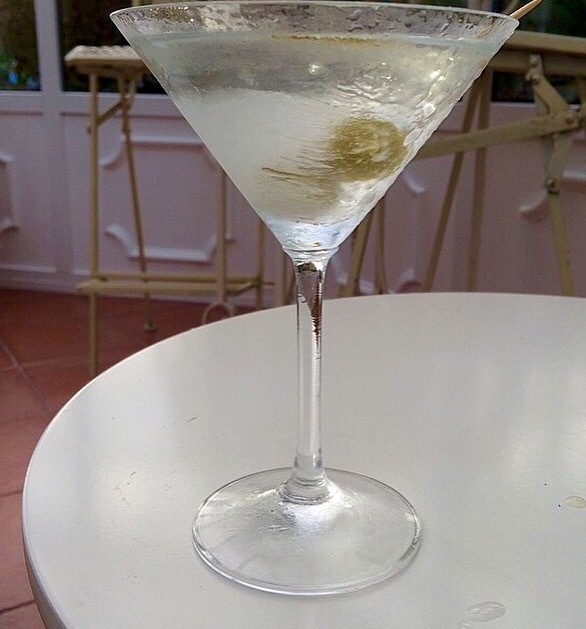
However, if you make a standard martini my way the finished product looks better, tastes better and is far easier to prepare.

If your gin/vodka has been in the freezer for at least 6-8 hours (preferably overnight) take the bottle out and stand it upright for a few seconds. A light frost should appear across the glass as it comes into contact with the room temperature air.

If the gin is cold enough you should be able to run your fingernail down the side of the bottle so that the frost lightly scrapes off.
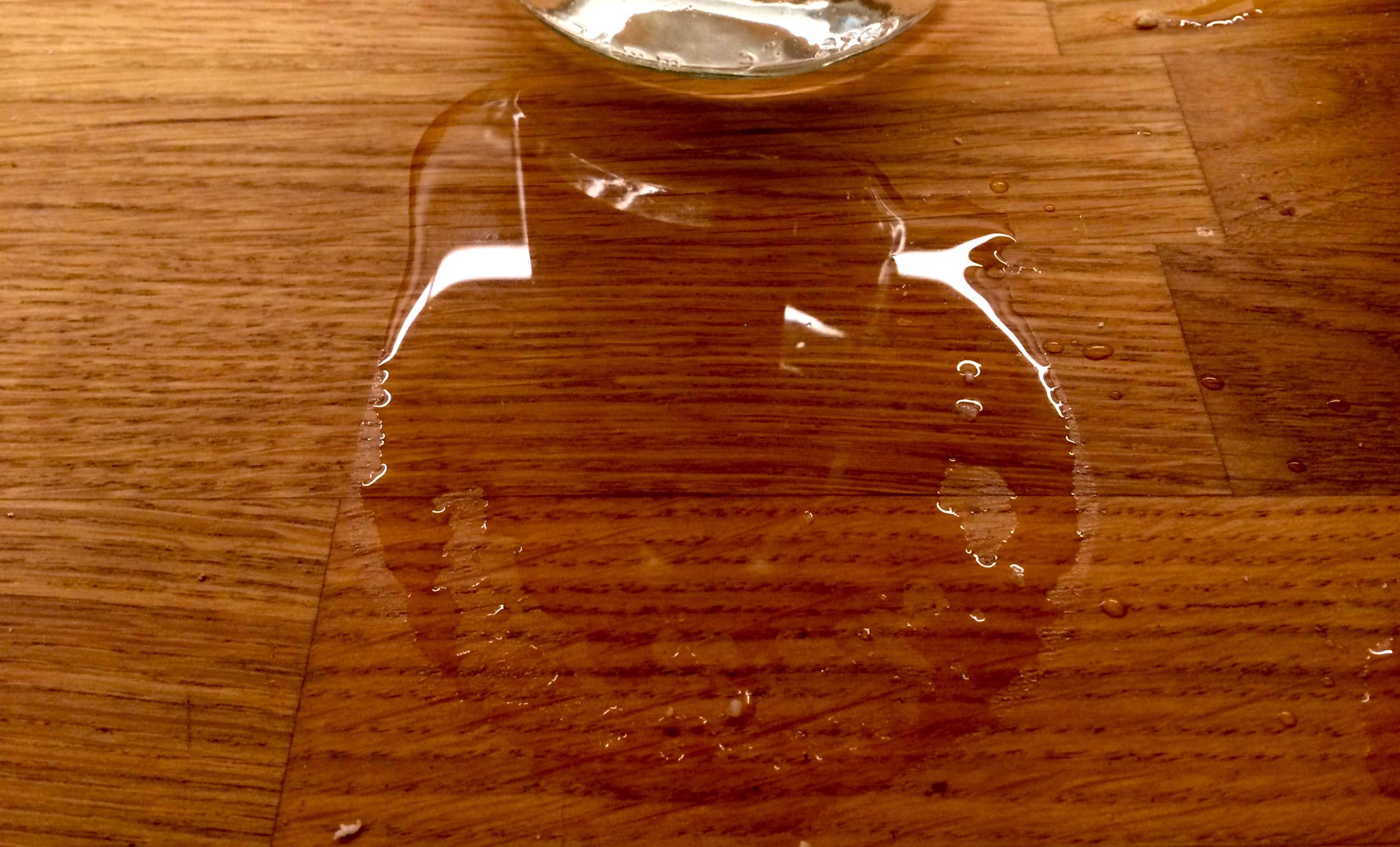
It should melt within a few moments (if it’s very well frozen it can take a minute or two and leave a very reassuring puddle) but so long as you actually feel the frost scrape off the side of the bottle, the gin or vodka is cold enough.
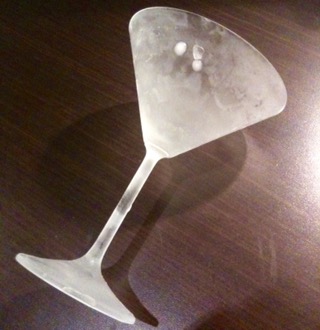
The same test should also apply to the martini glass.
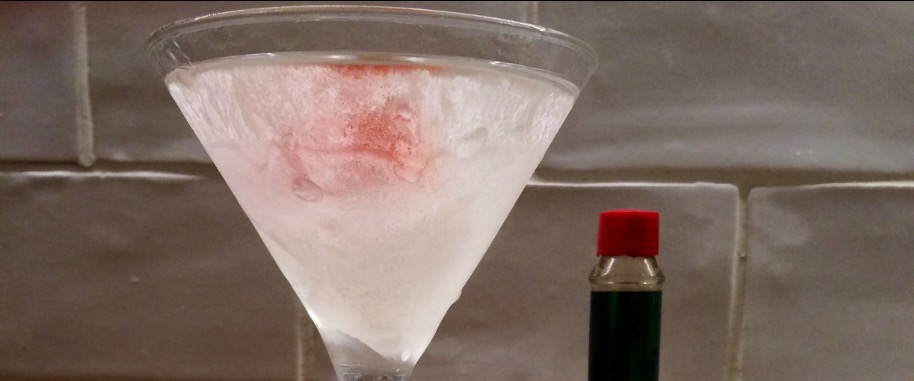
Once the martini is poured, the glass and liquid within it should be so cold that a dusting of frost, or even a thin layer of ice forms around the outside of the glass – even with the added heat of Tabasco sauce as above.
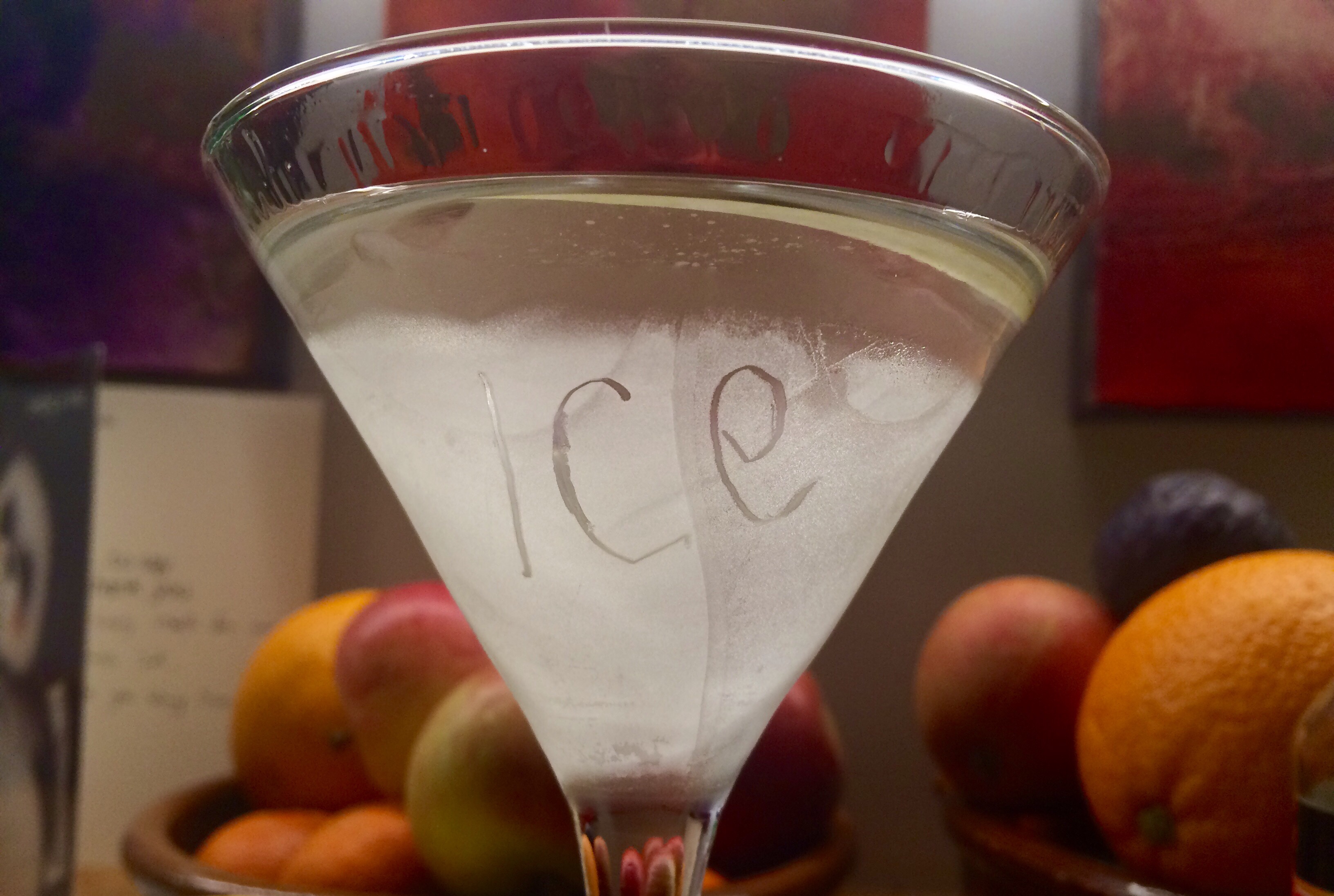
Again, you should be able to scratch this off.

When you hold the glass to take your first sip it should also leave the indentation of your fingerprints on the surface.
At the time of pouring, your martini should be at least minus 10 degrees Centigrade (14 degrees Fahrenheit). Mine at home tend to be around 15-16 degrees Centigrade (3-5 degrees Centigrade).
Some people call for it to be warmer, but trust me, for that first sip, you want it nice and chilly. If you want to really taste the botanicals in the drink, you will get plenty of time over the following 30-40 minutes.

After about 10 minutes the frost should melt, leaving a drizzle of condensation running down the glass.
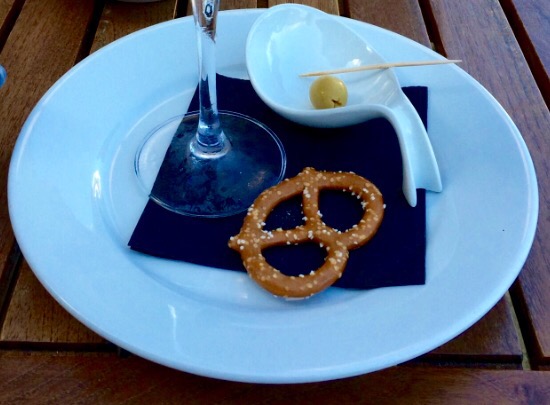
It helps to serve the glass with a paper napkin to soak up any water that runs down the stem.

If a martini looks clear like this when served, it probably hasn’t been properly chilled.

Once you realise how much of a difference the temperature makes, you might find yourself freezing all sorts of drinks and glasses.

I am told that the fingernail test originated in Russia as a means of judging whether or not vodka was sufficiently cold enough to drink neat. I will not take a political stance on this, and the procedure is just as valid in Ukraine, Finland, Canada or anywhere with a freezer.

Either way, have a go at keeping your gin or vodka in the freezer permanently, so you can enjoy the frosty beauty of an easily-prepared martini at home. Don’t forget to read the quick-fire guide to making them here.
 The Martini Socialist
Very interesting pointers!
From your spelling I see that you are likely in the U.K. If so then this American is happy to meet a UK resident who isn’t afraid of cold drinks.
LikeLiked by 1 person
I am indeed in the UK, and always honoured to have American readers seeing as the martini is very much an American creation. It’s an even greater honour for me to pour a martini for an American, and something that even makes me a little nervous as I don’t want to mess it up! I learned a few weeks ago that one of the defining characteristics of an ‘American bar’ from the first half of the 20th century was that, unlike other drinking establishments, they had ice on the premises – a modern novelty. I would say that today the perception that the UK likes warm alcoholic drinks is maybe less relevant as habits have changed. We definitely like our lagers cold, while our national staple, the gin and tonic, would be unacceptable without ice, although I must confess I do like room temperature ale and absolutely adore a Guinness in the winter months.
LikeLike
You needn’t worry about preparing martinis for Americans, because there’s no single right way to do it. The only thing that might get you the side-eye from some of us–and I can’t say I disagree– is the appellation of other drinks as “martinis” just because they are served in the same sryle of glass.
Ask them if they ever watched the show Scrubs and if they remember “J.D.” and his penchant for an “appletini, easy on the tini”. If they sneer, then you know you are serving the right sort.
LikeLike
Oh I absolutely agree with this. I might add one or two of the above to the blog but it is purely from an exploratory perspective. For me, I like it classic, very dry and very cold!
LikeLike
How do you feel about adding orange bitters, a trend which the Angostura people are doung their best to promote? I’ve tried it and I must admit I like it. It’s especially good if you only have vodka but prefer gin.
Probably worthy of its own blog post.
LikeLike
It’s a very, very historical way to drink martinis and I do like angostura bitters. I prefer my martinis without bitters but yes, worthy of a post! There’s also the Trinidad Martini which is majority bitters – quite something! My Mum likes angostura bitters in her gin and tonic as well.
LikeLike
I do need to ask – how do YOU like YOUR martini?
LikeLike
Usually at a proportion of about 4:1=gin:vermouth. I had been experimenting with Angostura orange bitters, but when I restocked a couple of days ago I bought Noilly Prat for the first time. This results in a much more nuanced martini in the first place. Thus, the orange bitters seem uneccesary at this point, at least until I’ve fully apreciated the NP vermouth.
In terms of preparation, I use the above proportion of ingredients to fill an old gin bottle that I keep in the freezer. I do stir the mixture in a m8xing glass filled with ice, which I also keep in the freezer. I hold that a little dilution is necessary for the optimal experience.
LikeLiked by 1 person
I’m going to go against the prevailing thinking. I don’t take 30-40 minutes to drink a chilled martini. It goes down way too fast for that. BUT I have found that serving a martini at room temp, especially a dirty martini, is way better. The flavour is more fulsome and I tend to take the time to enjoy the various botanicals and their interactions in both the gin and the vermouth. This might be as I make my own gin and vermouth and respect the effort it takes to make a mix that blends beautifully together. Vodka is definitely a spirit that benefits from chilling but chilling gin is like cutting the thumbs off a concert pianist, you’ll get a good performance but it won’t be the full thing.
LikeLike