
For American Independence Day, I’m posting about the classic American institution: the American Bar.
Sometimes referred to as a New York style bar, they are iconically reliable for their cocktail service. They evoke a tough set of expectations but rarely fail to deliver. Certainly not confirmed to the United States, they are constellated around the world, some of them still operating uninterrupted since first opening around the turn of the last century.
The Specialists
These bars evolved in the United States amid the rise of the cocktail, particularly after the invention of the ice box in the late 1800s. From then, ice became an increasingly affordable luxury, even in warmer climes.

Last year I attended a fascinating – and hilarious – lecture by veritable martini Gods Anistatia R. Miller and Jared M. Brown at the Barbican in London.

As well as pouring martinis for the guests (where we collectively broke the two martini rule!) we were regaled with a martini history lesson which included the origins of the word ‘cocktail’ in the late 1700s as well as the spread of the American bar to the world.

They also signed a copy of their brilliant book Shaken Not Stirred which I love.
The Origins
Of course American cocktail bars started in major American cities like New York, but they spread to new locations such as London, often catering to visiting American tourists as much as the locals. This is why so many of them are still found attached to hotels.
Of course, at the time, one of their standout features was serving drinks with ice. The concept was slow to catch on with chilly Europeans who didn’t see the need to cool down their drinks in the age before central heating. As such, the use of ice remained one of the standout features of the American bars for several years.

When the United States adopted prohibition many professionals in the drinks industry fled the country, sailing to places like Cuba and Europe. London was a primary destination and the American style of bar with ice and cocktails become even more established.
If it wasn’t for prohibition would cocktails have swept the world with such voracity? Perhaps not. In many ways prohibition was a golden age of the cocktail, turned illegal, it was driven underground and therefore made joyously taboo in the US, whilst simultaneously spreading around the world with the fleeing bartenders, from Havana to Paris.
Standing Out
One hundred years on from prohibition, ice is now widely available in bars around the world, including the UK where we now also enjoy the benefits of central heating. Nonetheless, the American Bar still stands out as a cultural institution on its own. Apart from ice and cocktails, what makes the concept stand out from the other venues?

Some of them are still running in all their glory, delivering a long line of attentive service, such as Duke’s Bar (above) and the Savoy (below).

They represent a golden era, reminiscent of a special time in history. They have a Proust-like power to evoke nostalgia, and have been doing so for decades. Many have an enviable list of esteemed celebrity guests who have visited, or frequented over the years.
They also tend to value quality over the latest trends. Some of the best continue to innovate of course, but rarely at the expense of their ability to deliver the classics to perfection.
Look and Feel
Many are blessed with original, vanishingly rare examples of Art Deco or Art Nouveau. Often sumptuously lit, with wooden and leather fixtures, or sometimes a zinc bar, they have a very sophisticated but highly comfortable style.

They almost always have key attention to detail and inclusion of plenty of nice touches, such as quality coasters and napkins. The glassware is never substandard.

Many have no music. Sound systems didn’t exist when they were created, and some venues are so protected by planning and conservation laws that it would be illegal to install them.
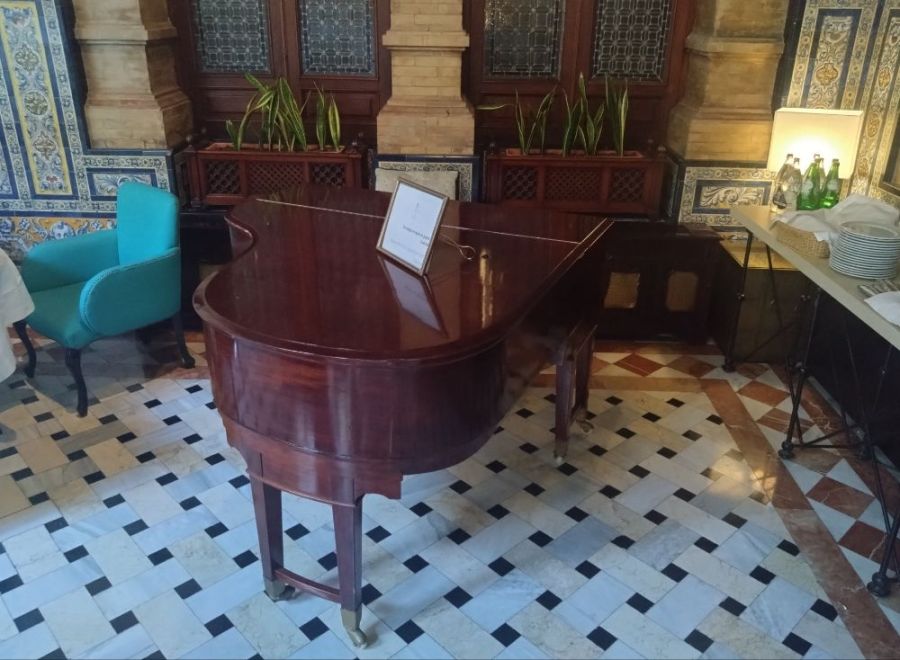
Traditionally they might have had musicians, or perhaps been located adjacent to a room with a band, but the American bar prioritises conversation and interaction. Music, if present, must be low enough not to interrupt the guests.
Professional Service
Attention to detail remains one of the standout features of the American bar today. They are often the domain of highly trained professionals, often the best in the industry, who have to balance care, perception, discretion and professionalism with a deep understanding of spirits and the craft of cocktail making.

Charm and charisma on the outside, they are whirring machines of knowledge and service underneath their smartly dressed exteriors.
You are made to feel like a VIP, so it’s nice to dress accordingly. The expectations of the staff are so high I feel like it’s a nice way to show them some respect.
Where to find them
Some of the highest profile classic American Bars exist in London, a testament to the 1920s. Obvious examples include the acclaimed American Bar at the Savoy, the new but delightfully old-spirited Bar Americain at Brasserie Zedel, and of course, one can never overlook the absolute classic, and indeed spiritual home of this author, that is Duke’s.

Other famous standouts include the Bar Hemingway and New York Bar in Paris, Harry’s Bar in Venice and El Floridita in Havana. I also recently got to try a martini at the Bar Americano in Seville (above) which I recommend.
These, and many more beautiful examples that remain around the world are a testament to the spread of American culture and expertise over a century ago. I am very grateful that they still exist – testament to the extremely hard work of all those keeping these old buildings looking fresh with excellent service on hand.
I am reminded of a line by Monsieur Gustave (played by Ralph Fiennes) in the Grand Budapest Hotel.
Thank you America for your contribution to global culture with this concept. Please could someone add it to the UN list of Intangible Cultural Heritage items, and enjoy yourselves a Happy Independence Day.
If you’d like to find out more about martini bars around the world, try my venue review page here.
 The Martini Socialist
Might I suggest in Barcelona:
Boadas (the original 1933 American-style Cuban cocktail bar)
Ideal Cocktail Bar (described by Simonson as what a Manhattan cocktail bar in the 1950s must have been like)
Bar Olimpic Bareto (opened by an alum of Boadas)
Caribbean Club (a temple to rum and all other cocktails in a perfect setting).
LikeLiked by 1 person
Amazing, thank you very much, I will have to plan a visit!
LikeLike